
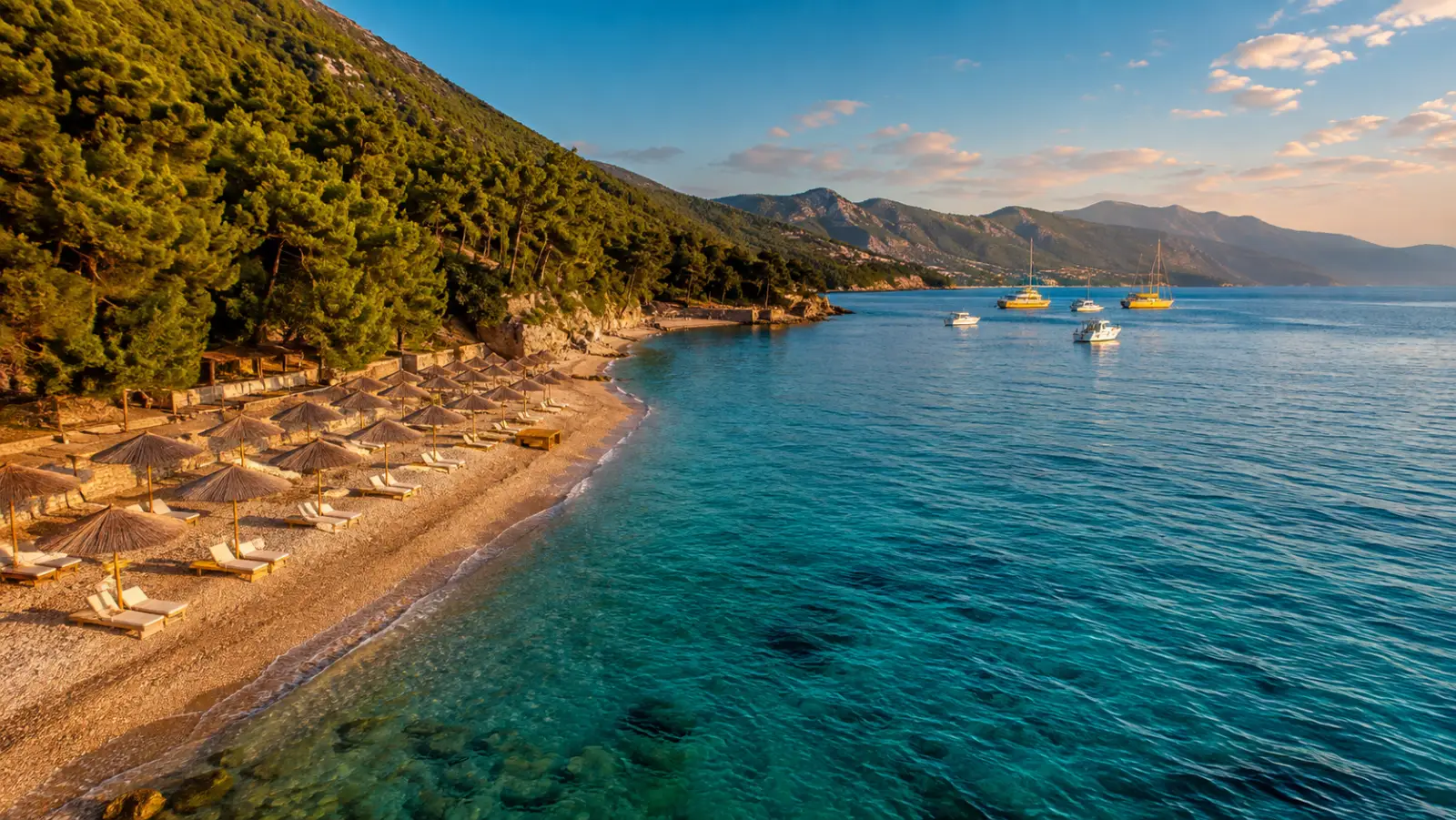
How I Rate Samos Beaches: My Quick Overview
After a decade of returning to Samos, I still choose the beach on the morning, not the night before, and the wind is the reason why. The island covers roughly 477 km², rises to Mount Kerkis at about 1,433 m, and wraps more than 50 kilometres of coastline around the Aegean Sea. The north holds pebble coves like Tsamadou and Lemonakia; the south-east keeps sandy strands such as Psili Ammos. From May to October, sea temperatures reach about 24–26 °C with 8–10 m visibility — verify current conditions. The Meltemi wind, blowing July–August, chops the north coast, so I head south. Most beaches need car rental; buses serve only main towns. I rate each one on surface, organisation, wind, access and who it suits — more in my things-to-do hub.
Sand or Pebbles? What I Found on Samos Shores
My honest answer to the sand-versus-pebble question on Samos: the south-east gives you sand, the north gives you pebbles, and both are worth packing for. Before the detailed reviews below, here is how the main shores divide up, which beaches need water shoes, and where pine shade saves you a parasol. Psili Ammos is the sand benchmark; Tsamadou and Potami anchor the pebble side; Kokkari mixes fine pebbles with crushed shell. Use this as a quick reference before choosing between the organised north-coast coves and the wide southern strands, because the surface underfoot changes how you plan everything from footwear to shade.
| Beach | Surface | Organised? | Meltemi wind | Access | Best for |
|---|---|---|---|---|---|
| Tsamadou | Small pebbles | Yes — sunbed sets ~€6–8, bar | Open north — choppy | Road + 200 m path, free lot | Snorkelling, pine shade |
| Lemonakia | Pebbles | Partly — small bar | North-facing | Road + 100 m path | Quiet, clear water |
| Kokkari town beach | Crushed shell & pebble | Yes — tavernas, sea ramp | Afternoon chop, windsurfing | Walkable from village | Atmosphere, windsurfing |
| Psili Ammos | Proper sand | Partly organised | South — stays calm | 9 km from Vathy, car | Families, flat water |
| Mykali | Sand/shingle | Partly organised | South — calm | Near Pythagorio, car | Quieter south-coast day |
| Potokaki | Sand, gentle entry | Organised strip | South — calm | Near Pythagorio & airport | Long family swims |
| Potami | Shiny pebbles | Yes — sunbeds ~€6–8 | West, mostly sheltered | 35 km from Vathy, road | Waterfalls combination |
| Megalo Seitani | Sand, wild | None — Natura 2000 | Exposed north-west | 3 km hike from Potami | Hikers, total seclusion |
| Balos (Koumeika) | Sand & pebble lagoon | Minimal — bring supplies | Southwest — calm | Road plus walk, or boat | Chest-deep lagoon |
Compare car hire
This search box is provided by a booking partner and sets cookies.
Booking with a partner may earn this site a commission at no cost to you.
My Experience with Organised vs Wild Beaches
Samos spans every level of organisation, from Tsamadou's sunbeds and beach bar to Megalo Seitani, which has nothing at all, and that range shapes how I pack for each day. On organised stretches I arrive with a towel and card for a set costing roughly €6–8; on wild ones I carry water, shade and shoes. Votsalakia's taverna-lined south-west shore sits somewhere between, while Balos is simpler by boat. Knowing which model applies saves disappointment: facilities thin out outside July–August, remote coves never have them, and payment is usually cash. Here is how I split the island's beaches by service level and what each choice realistically costs per day.
What goes in the bag depends on which of those two days you are planning:
- Towel, swimwear and a card or cash for sunbed sets (~€6–8) on organised beaches
- Water shoes — Tsamadou, Potami, Kokkari and Lemonakia all punish bare feet at midday
- Your own mask and snorkel if you want Tsamadou's eastern rocks
- Water, food and serious sun protection for Seitani or Balos — no shops exist there
- A light windbreaker for early-season mornings on the north coast
How I Plan Beach Days Around the Meltemi Wind
The Meltemi wind is the single factor that decides my beach day on Samos in July and August, and learning its logic transformed my trips. This northerly chops the north coast while leaving south-coast beaches calm, so Kokkari becomes a windsurfing spot exactly when Psili Ammos turns glassy. A hire car lets me swap coasts in under an hour. Below I explain which bays the wind exposes, which shores stay sheltered, and how I check the forecast each morning before committing to a cove.
Every Samos Beach I've Visited: My Detailed Reviews
I've swum most of these beaches over several summers, and this guide breaks the north-coast vs south-coast wind logic down beach by beach.
Tsamadou Beach
Tsamadou sits across the bay from Kokkari—a 600-metre arc of small pebbles beneath thick pines that shade most of the beach until early afternoon. I treat water shoes as compulsory here. It's well organised: sunbed and umbrella sets run roughly €6–8 (verify on site), with a beach bar and snack bar. Access is an asphalt road plus a 200-metre path down from the car park—not especially difficult; I park at the top.
The green-blue water is clear, visibility down to 8–10 metres, and I've snorkelled the rocks at the eastern edge—prime snorkelling territory. Open to the north, it catches the Meltemi chop, so I come early on windy days. The eastern end stays noticeably quieter with deep pine shade until midday.
Psili Ammos, 9 km from Vathy, is Samos' rare proper sandy beach: soft sand, no water shoes needed, shallow calm water for children, and—on the sheltered south coast—flat water even in Meltemi; cruise ships often pass offshore.
Potami, 35 km from Vathy near Karlovasi, offers shiny pebbles and quickly deepening water, sunbeds around €6–8, a chapel of Agios Nikolaos above, a 15-minute waterfalls walk inland, and the 3-km trail to Megalo Seitani starting here.
Lemonakia, a 10-minute drive northwest of Samos Town, lies down a 100-metre path from the main road: pebbly, partly organised with a small bar, clear water, but north-facing—arrive early or skip it on strong Meltemi days.
Kokkari's town beach stretches about 800 metres of crushed shell and pebble, fully organised with tavernas at the waterline; afternoon Meltemi chop draws windsurfers, and the village's smaller cove suits a calmer hour.
Mykali, on the east coast near Pythagorio, is a long, only partly organised strip—quieter than Psili Ammos, with a gradual entry, scattered sunbeds, a couple of tavernas and views across the narrow strait to Turkey.
Remote & Boat-Access Beaches
The best beaches on Samos are the ones you have to earn, and Megalo Seitani is the clearest example: about three kilometres on foot from Potami, with nothing waiting at the far end. Its Natura 2000 status means no development and no shade—a wide sandy bay beneath Kakoperato gorge. Mikro Seitani, smaller and rock-framed, lies on the same trail and is usually empty. Balos near Koumeika offers chest-deep water; boat trips are seasonal—verify schedules. I carry water, food and sun protection, start early, and need car rental for either trailhead.
How I Choose the Perfect Samos Beach
Choosing between Samos' beaches comes down to four filters: sand or pebble, organised or wild, which coast the Meltemi is hammering, and how far your car will take you.
For families, Potokaki's long south-coast strip near Pythagorio has the gentlest entry, while Kokkari's town beach adds a sea ramp, sunbeds and tavernas nearby. Tsamadou's pine shade matters at midday with toddlers; on windy days, Psili Ammos' flat water wins. Water shoes halve the complaints on pebbles.
For snorkelling, Tsamadou leads: small pebbles, green-blue water and visibility of 8–10 metres, best along the eastern rocks. Lemonakia is the quieter second option. Samos' pebble beaches out-see its sandy ones; bring your own mask, though organised beaches sometimes rent sets.
Getting to the Beaches: Access & Parking
I'll be direct: you need a car to enjoy Samos' best beaches—public buses reach only Kokkari and Pythagorio town beaches in summer. Rental costs €25–40 per day; book early via my car rental guide to save 20–30%. Parking is free at Tsamadou (the lot fills by 11:00 in July), Potami and Lemonakia (arrive before 10:00); €2–3 charges appear at some organised beaches in peak season. Without wheels, Kokkari's beach is a 400-metre walk from the village centre—your best car-free option. Megalo Seitani means the 3-km trail from Potami, 45 minutes in sturdy shoes; Balos and the remote coves are boat-only (trips from Kokkari, €30–40). Choose a base with my best areas guide.
When to Visit: Best Season & Sea Temperatures
I time my Samos beach visits to May, June, and September—warm water, manageable crowds, and predictable Meltemi patterns that let me pick the calm coast each morning. The season runs May to October: sea temperature starts at 22°C in May, peaks at 25–26°C between June and September, and holds near 23°C in October.
The Meltemi, a northerly Aegean wind, peaks in July–August at 15–25 knots, chopping up the north coast (Kokkari, Lemonakia, Potami) after midday while southern beaches like Psili Ammos and Mykali stay flat. In May–June and September–October it weakens to 5–10 knots, so both coasts work.
In August, Tsamadou fills by 10:00 and parking gets tricky. I check Windy.com each morning before choosing a coast.
FAQ
Before you plan your beach days around Samos, these are the questions I'm asked most often — about water shoes, wind, transport and what sunbeds actually cost in 2026. Each answer draws on my own visits, though rates and conditions change seasonally, so verify current details before you travel.
Do I need water shoes for Samos beaches?
Yes, for most beaches. Tsamadou, Potami, Kokkari and Lemonakia all have small-to-medium pebbles, so water shoes make entry far easier and protect your feet. Mare Deus particularly needs them for its stony waterline. Sandy exceptions like Psili Ammos don't require them.
How does the Meltemi wind affect beach choice in Samos?
The Meltemi is a northerly summer wind that makes north-coast beaches — Tsamadou, Lemonakia, Kokkari, Potami — choppy, which windsurfers love. South and west coasts (Psili Ammos, Mykali, Votsalakia) stay calm. On strong Meltemi days, I head south; always check the forecast.
Can I reach Samos beaches without a car?
Most beaches need a car, as public transport is limited. Walkable exceptions include Kokkari's town beach and Pythagorio. Remote spots demand effort: Seitani requires a 3km hike from Potami, and Balos-like coves need boat access. See my car rental guide for hire options.
What are typical sunbed prices at Samos beaches?
Charges vary by beach, so treat any figure as indicative and verify current rates on arrival. Well-organised beaches like Tsamadou, Potami and Kokkari typically charge per sunbed-and-umbrella set, with daily rates posted at beach bars. Livadaki offers free sunbeds; at Pappa Beach you pay on departure by umbrella number.
Where next
Keep planning: Things to do hub, Where To Stay/Best Areas, Car Rental.